Mortgage forbearance ending – how do you keep your house?

We are coming up on two years of the COVID-19 pandemic – clearly, no one thought it would last this long. Many Dallas-area residents have had to take significant pay cuts or have even lost their jobs. Our firm has helped hundreds of DFW residents get a fresh start after COVID-related problems caused unmanageable debt, but many other people in the area are still struggling.
Most of the foreclosure and eviction moratoriums have ended recently, so many Dallas residents are wondering how they’re going to keep their homes. Rubin & Associates is here to help! We have put together this blog post to help answer some of the common questions we’re hearing about the end of mortgage forbearance. (more…)
 It is Halloween this weekend, so we had to share something scary here on the blog… and this time, we are sharing 4 Scary Ways to Damage Your Debt. Let’s face it – nothing is scarier than overwhelming debt that spirals out of control.
 The proliferation of credit cards and the “gotta have it now” American lifestyle have lead to a problem: for many Americans, living with debt is par for the course. The changes in America’s financial landscape due to COVID and resulting lockdowns have only made things worse. In many cases, debt spirals out of control until filing for bankruptcy appears to be the only way out.
 Most of our clients come to us, struggling with massive debts that have spun out of control. One unforeseen bump in the road (a sudden job loss, an accident, a medical condition) is all it takes to send most families into a downward debt spiral. We have shared lots of tips in the past for avoiding debt, but it is also important to get advice from a financial advisor or bankruptcy attorney before you decide to file.
 One of the most common reasons that people file for bankruptcy is to stop foreclosure actions. Rubin & Associates help DFW area residents and property owners with cases like these quite often.
 Filing for bankruptcy is a huge decision, and usually it has to be made under pretty extreme stress. Your circumstances are unique – so the best way to know if you should file is to call us at 214-760-7777 for a free consultation. The pandemic and ensuing lockdowns have made the situation even more stressful for many DFW area residents. This post will help answer a few high level questions, but it is always better to talk to an expert to get answers about your specific situation.
 It’s tax season again, and with the COVID tax delay, taxes are almost due. Every spring, we hear lots of questions from potential clients about the tax implications of filing for bankruptcy. It’s a fairly simple answer – it depends on whether the debt was discharged in bankruptcy or just forgiven by the creditor.
 It’s a question we hear all the time – after a client files their bankruptcy case, they ask us “Should I keep my car?”
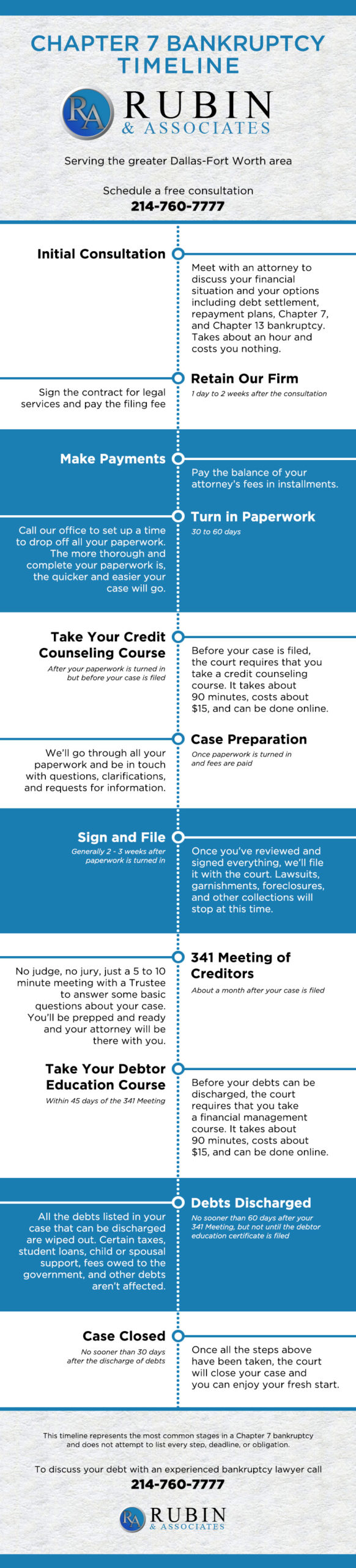
 You have just filed your bankruptcy case, and now you are on pins and needles. You’ve gotten all the paperwork together, answered all our “lawyer questions”, and filed all of your schedules with the court. What happens now?